SEARCH RESEARCH · 2026
Measure what people hear, not just where you rank
A research suite, shown on ADHD, that answers what an SEO or AEO audit can’t: who’s searching, what they’re told, and whether it holds up.
Justin McKinley
THE QUESTION
Rankings don’t tell you what people hear
THE BLIND SPOT
A traditional audit reports rankings, traffic and keyword volume. It can’t say who is asking, what AI answers say without a click, or whether the sources behind them meet clinical standards.
WHAT I BUILT
Mindset Report
How wording changes what 7 AIs, Google, YouTube and Reddit say and cite.
Search Landscapes
What YouTube and TikTok show for 50 real search phrases.
Messaging Playbook
Audience-by-audience briefs for articles, creators and video.
WHO’S ASKING
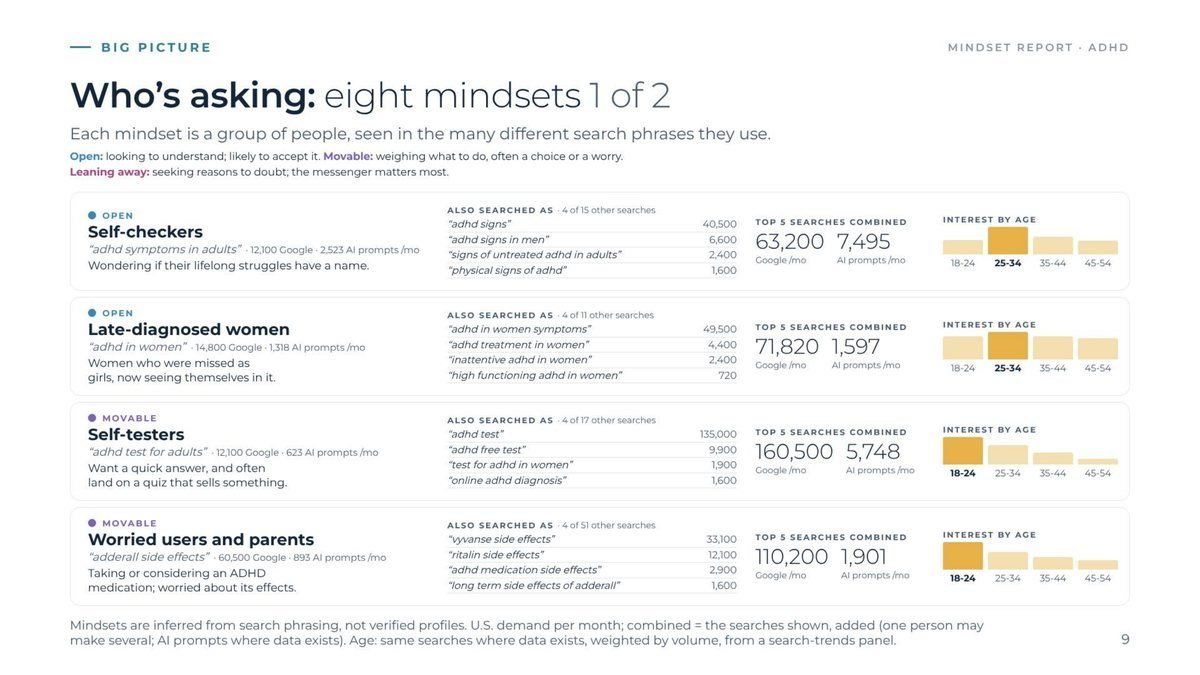
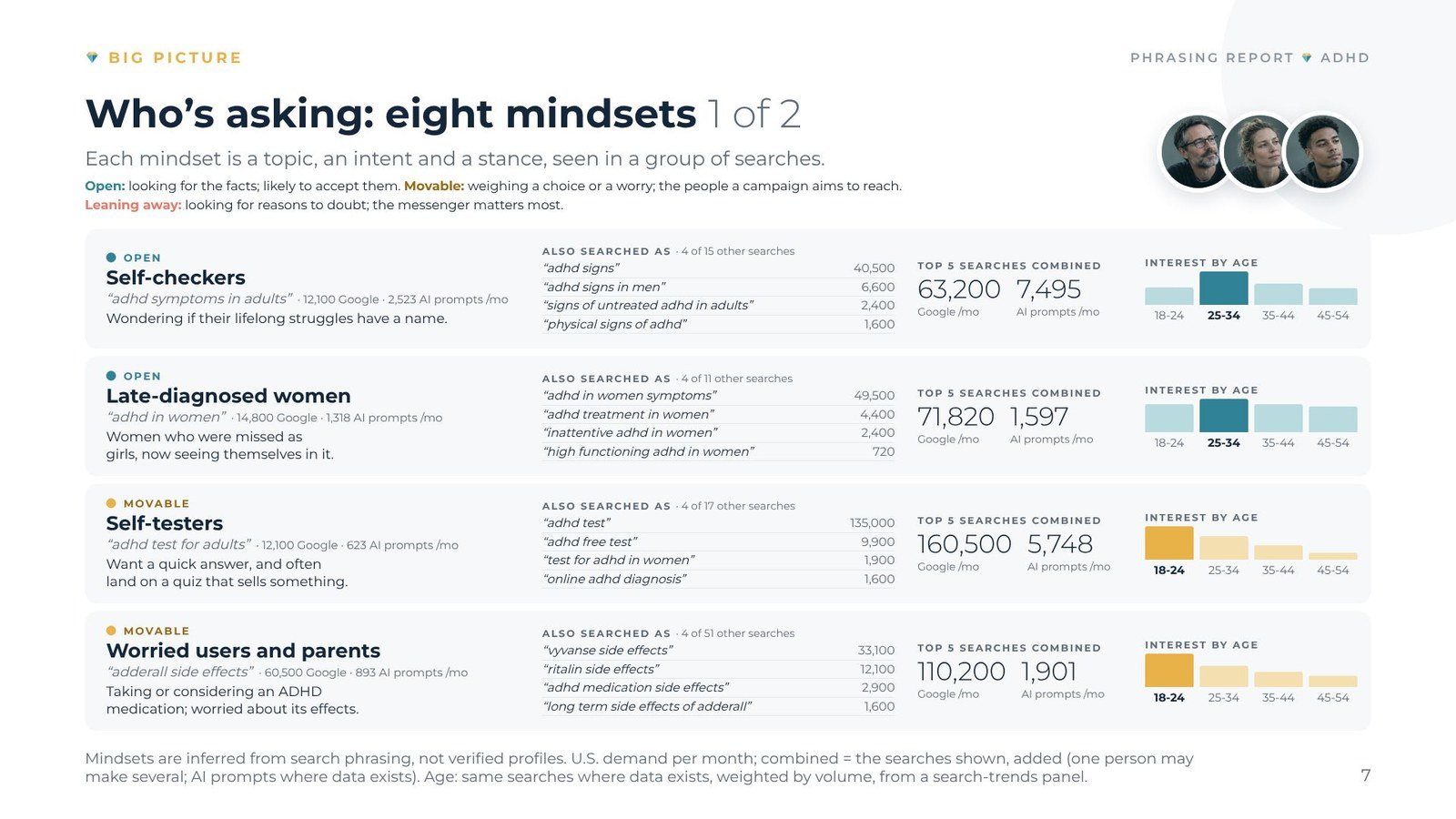
Eight mindsets, not one keyword list
THE INSIGHT
The same topic is searched by very different people. I group the searches on a topic into audience mindsets, based on how people actually phrase their questions.
WHY IT MATTERS
A self-tester typing “adhd test” needs a different answer, and a different messenger, than a parent worried about medication side effects.
WHAT AI SAYS
The answer is right. The sources aren’t.
SIDE BY SIDE
I compare what AI assistants, search and video platforms tell each audience, and check whether the sources behind those answers hold up.
WHAT IT FOUND
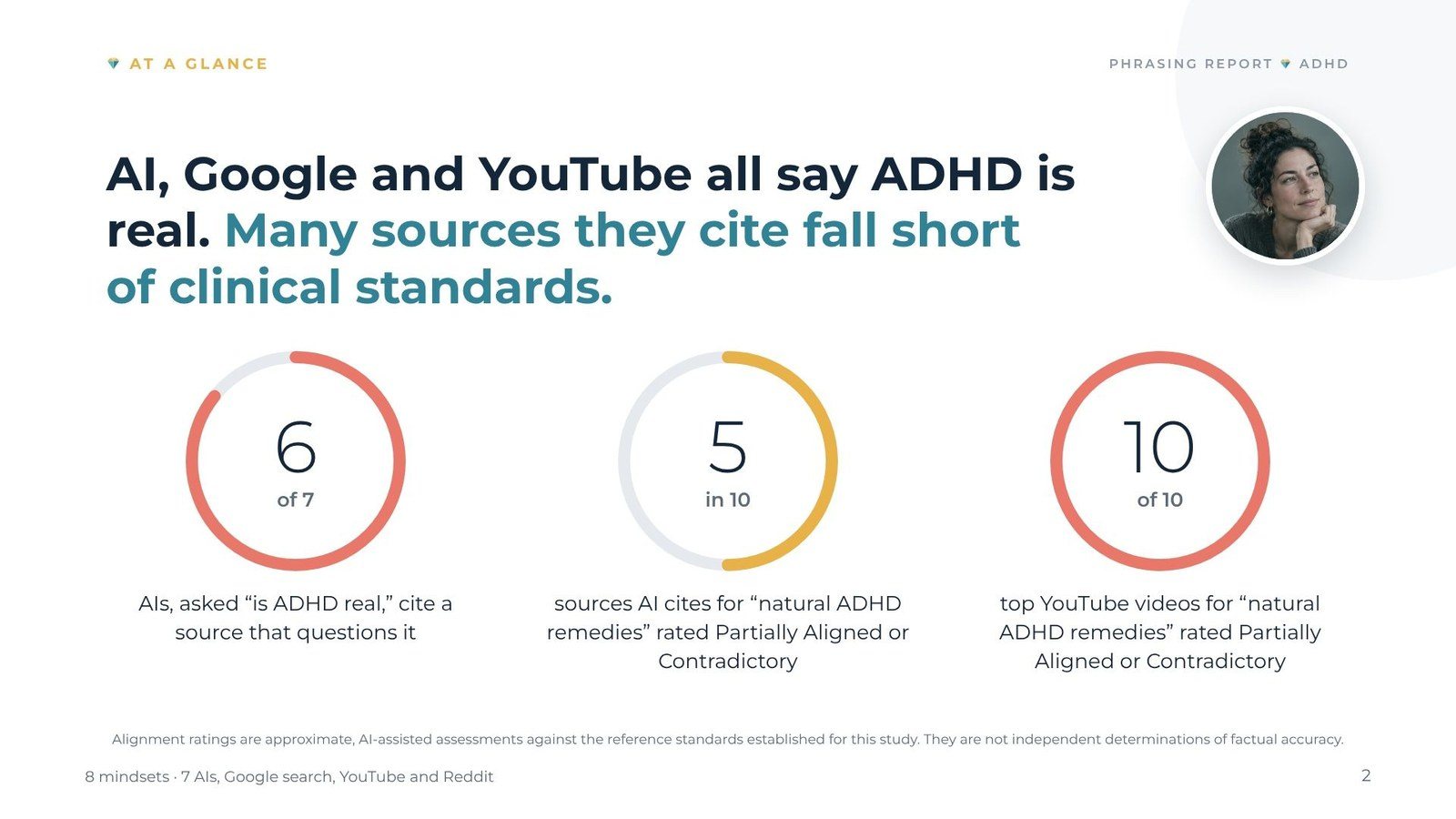
AI, Google and YouTube all say ADHD is real, but many of the sources they cite fall short of clinical standards, especially for natural remedies.
WHAT PEOPLE SEE
What people see, not just what ranks
THE SHIFT
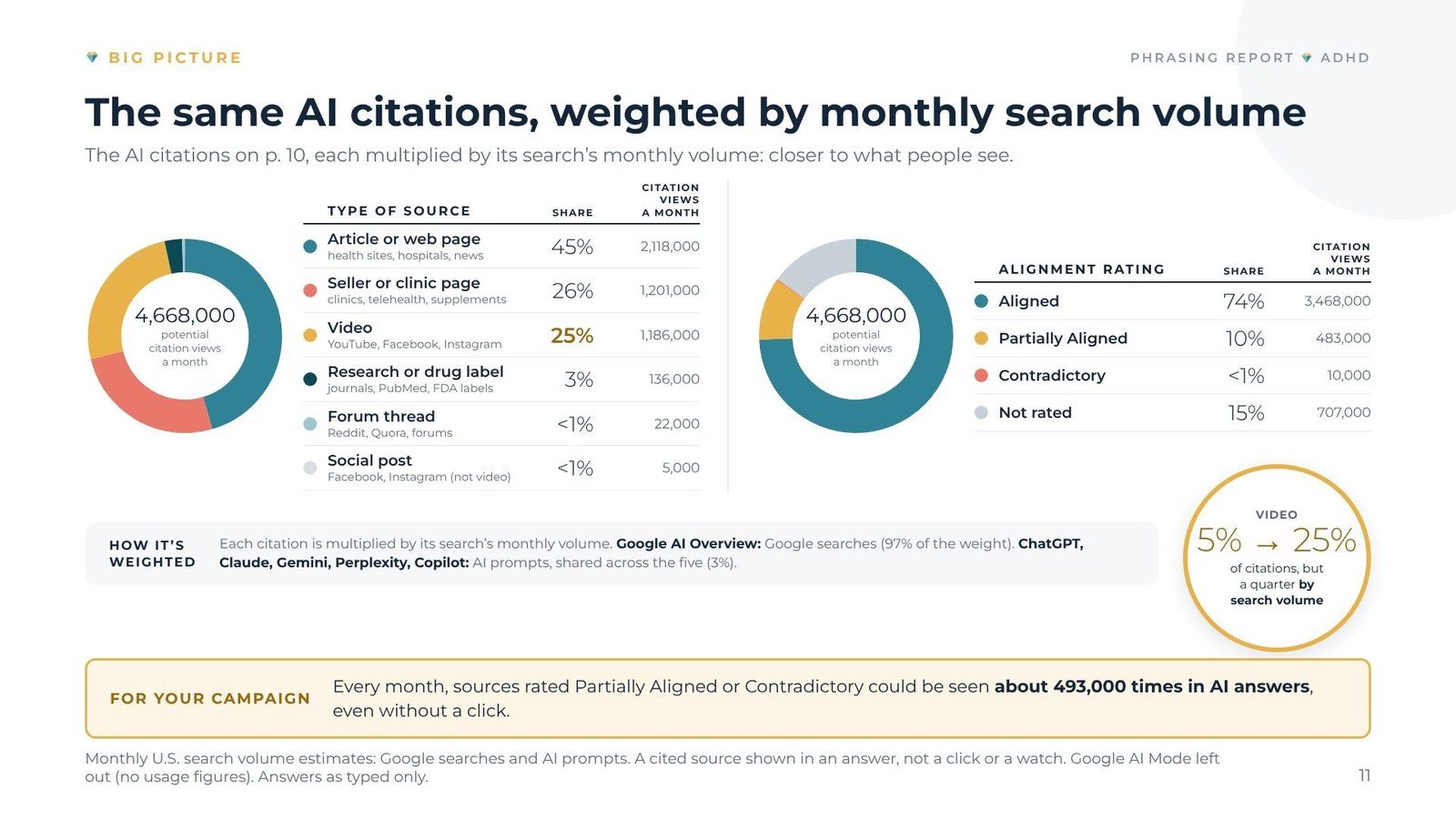
The report looks at what people are likely to see in an answer, even when no one clicks.
WHAT IT SHOWS
Video is only 5% of citations, but a quarter of what people likely see. A traditional audit would miss that shift completely.
FROM FINDINGS TO BRIEFS
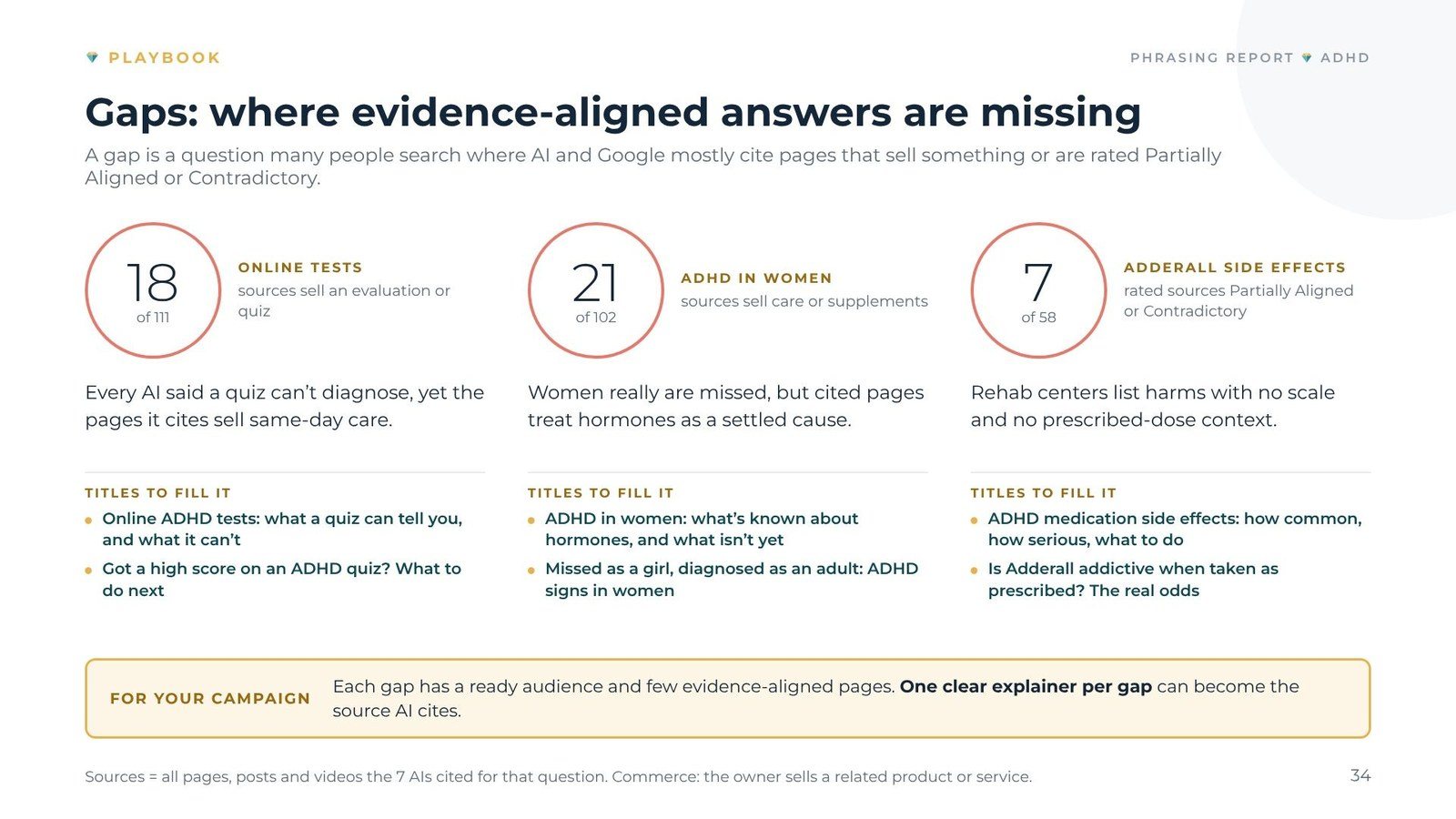
Every gap comes with titles to fill it
THE GAPS
A gap is a question many people search where AI and Google mostly cite pages that sell something or fall short. Each one gets ready-to-write titles.
ON VIDEO
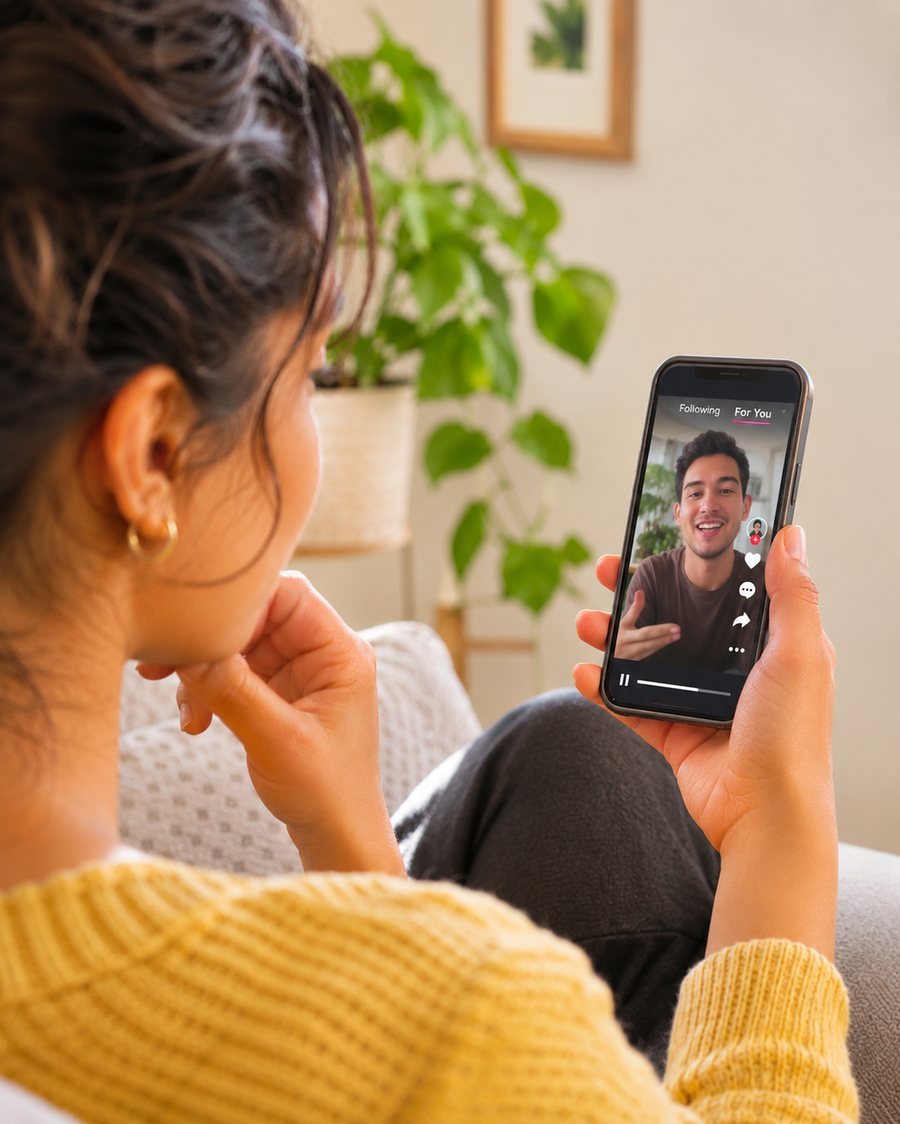
Companion landscapes map what YouTube and TikTok actually show for 50 search phrases, and who gets the views, so creator briefs target real searches.